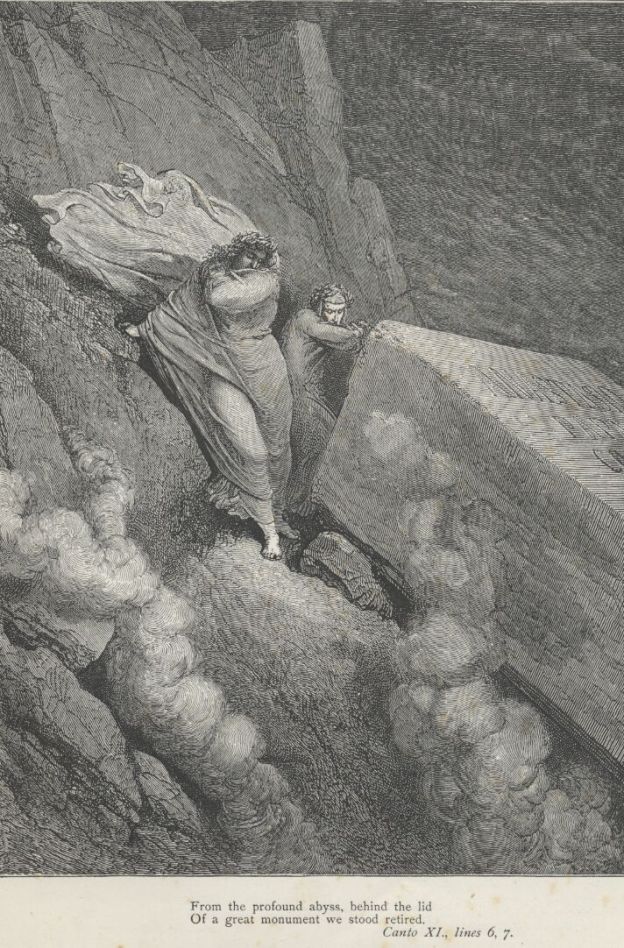
“facilis descensus Averno; noctes atque dies patet atri ianua Ditis; sed revocare gradum superasque evadere ad auras, hoc opus, hic labor est. Pauci, quos aequus amavit Iuppiter, aut ardens evexit ad aethera virtus, dis geniti potuere.”
Aeneid, Book VI, 74-76
“It is easy to descend into hell; night and day, Pluto’s gloomy gates are open; but to walk back, overcome, and walk out into the air of the upper world, this effort, this is labor. To be able, a few, people of the gods, whom Jupiter loves well, blaze with courage, bring forth toward the air of the upper world.”
Sibyl reminds Aeneas of his mortality; everyone eventually visits the underworld at death, but only the chosen few returns. Katabasis, a heroic visit to the underworld, is usually a rescue mission or a kind of scavenger hunt. Jesus frees virtuous souls and Orpheus his wife; Aeneas seeks his father. Our world is characterized by the air (auras and aethera), and hell, later, by its bad smell, grave olentis (201). “Going through hell,” is how we characterize adversity; yet it can be a journey, a transition. What we see, smell, and hear reveal the past, the future, and a way out.
 Roger Valdez